
Bangladesh RMG Industry 2026: Resilience, Challenges, and the Path Forward
- Blog|
- 3 September 2026
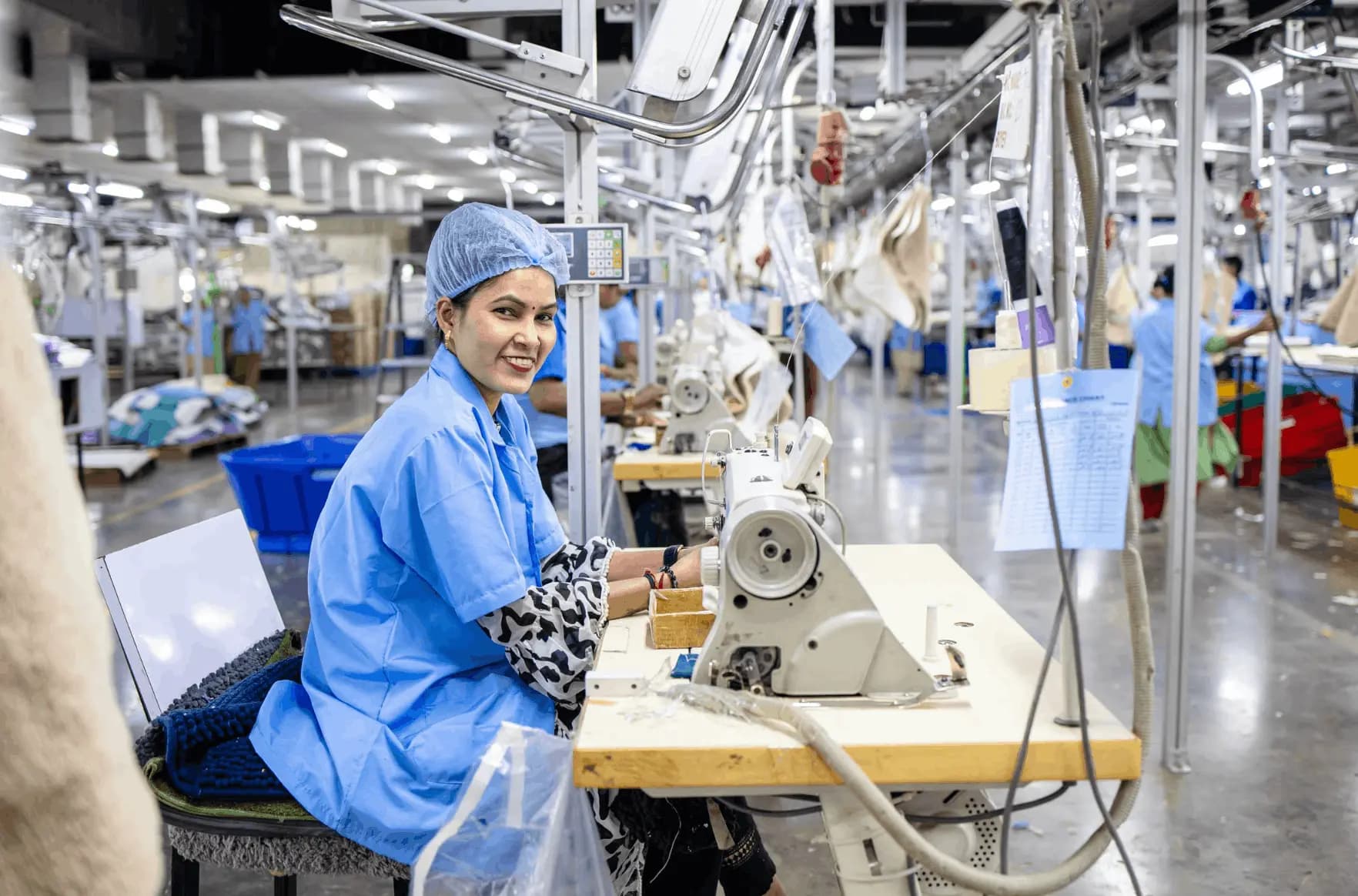
Bangladesh's ready-made garment (RMG) sector remains the cornerstone of the national economy, accounting for over 80% of total export earnings. As one of the world's largest apparel exporters, the industry continues to demonstrate remarkable resilience despite global headwinds, energy constraints, and the approaching challenge of LDC graduation.
At Top Apparel Sourcing, we closely monitor these industry dynamics to serve our global clients with informed, reliable sourcing solutions. Here is our comprehensive analysis of where Bangladesh's RMG sector stands in 2026.
Strong Export Performance in August 2026
Bangladesh's merchandise exports rebounded strongly in August 2026, recording 13.14% year-on-year growth to reach $4.43 billion**. The RMG sector led this recovery, with exports rising **13.92%** to **$3.61 billion.
| Category | August 2025 ($B) | August 2026 ($B) | Growth (YoY) |
|---|---|---|---|
| Knitwear | 1.77 | 2.03 | +14.88% |
| Woven Garments | 1.40 | 1.57 | +12.70% |
| Total RMG | 3.17 | 3.61 | +13.92% |
Source: Export Promotion Bureau (EPB) & BGMEA
Both major apparel segments posted solid growth, with knitwear exports rising 14.88% to $2.03 billion and woven garments growing **12.70%** to $1.57 billion. The RMG sector's contribution to total merchandise exports stood at 81.47% in August.
Notably, exports in the first two months of FY2026-27 (July-August) rose 5.43% to **$9.16 billion**, compared to $8.68 billion in the same period last year. This positive momentum signals continued buyer confidence in Bangladesh as a reliable sourcing destination.
Significant Challenges Facing the Industry
Despite these encouraging numbers, the industry faces substantial headwinds that require urgent attention.
Energy Crisis and Production Capacity
Bangladesh's gas crisis intensified significantly after July 21, 2026, following the shutdown of an FSRU (Floating Storage and Regasification Unit), cutting approximately 450 MMcfd of gas supply. Textile and garment factories in major industrial hubs subsequently faced low gas pressure, while power shortages added further production pressure.
Most factories are currently operating at less than 50% of their capacity due to inadequate gas supply, jeopardizing international export orders.
Rising Production Costs
High energy tariffs, soaring bank interest rates, and wage adjustments have increased overall production costs by nearly 40% over the past three years. Raw material prices have also risen significantly—yarn prices increased from $2.70 to $3.20 per kg in recent months.
Factory Closures and Job Security
Approximately 400 garment factories were forced to shut down over the past three years due to high operating overheads and order shortages, creating severe job security concerns. RMG exports contracted by 1.64% in FY2025-26 and declined another 1.92% in July 2026.
Opportunities and Strategic Advantages
Despite these challenges, Bangladesh's RMG sector possesses significant competitive advantages that continue to attract global buyers.
Global Buyer Confidence
Leading global retailers and industry experts affirm Bangladesh's position as a premier sourcing destination. Javier Carlos Santonja Olcina, regional head for Bangladesh and Pakistan at Inditex (one of the world's largest fashion retail groups), stated that Bangladesh has the capabilities to become the world's most attractive apparel sourcing destination. He identified three priorities: world-class logistics infrastructure, higher value-added products, and closer industry collaboration.
Ziaur Rahman, regional head of H&M, described Bangladesh as the company's "most important sourcing destination" and confirmed the retailer would increase its involvement with the country. He also predicted that Bangladesh's RMG exports could reach $100 billion within the next decade.
Sustainability Leadership
Bangladesh is home to the world's highest number of green factories. The industry is making significant progress in environmental sustainability, workplace safety, and responsible business practices.
Recent partnerships demonstrate this commitment:
BGMEA and ActionAid Bangladesh signed a five-year MoU (2026-2030) to strengthen human rights and environmental due diligence, enhance compliance capacity, and improve workers' quality of life.
BGMEA and the Global Reporting Initiative (GRI) signed a Strategic Partnership Agreement to advance sustainability transparency in Bangladesh's textile and apparel sector.
Growing Export Markets
August 2026 export data shows strong growth across key markets:
| Market | Growth (Aug 2026) |
|---|---|
| United States | +26.09% |
| Türkiye | +141.03% |
| South Korea | +42.37% |
| Saudi Arabia | +42.09% |
Source: Export Promotion Bureau (EPB)
Largest Denim Exporter
Bangladesh is now the largest exporter of denim to both the European Union and the United States, surpassing China. With approximately 33% market share in the EU denim market, this position reinforces Bangladesh's competitive strength in value-added products.
LDC Graduation: A Defining Moment
Bangladesh's graduation from Least Developed Country (LDC) status—which will remove duty-free EBA (Everything But Arms) access in the EU—represents a critical inflection point. This transition will force Bangladesh to compete directly on product complexity, speed-to-market, and value addition.
BGMEA President Mahmud Hasan Khan underscored the gravity of this moment: "RMG is currently the biggest beneficiary of preferential access. In the post-LDC era, without the right trade arrangements in place, the apparel industry risks becoming the biggest loser".
To address this, BGMEA has called for stronger diplomatic efforts to sign Free Trade Agreements (FTAs) with key partners, particularly an FTA with the European Union, to preserve duty-free market access after graduation.
What This Means for Global Buyers
For international fashion brands, retailers, and importers, Bangladesh remains a compelling sourcing destination with proven capabilities:
| Advantage | Benefit |
|---|---|
| Cost-Competitive | Competitive pricing with bulk manufacturing capacity |
| Skilled Workforce | Experienced labor force with decades of garment manufacturing expertise |
| Green Manufacturing | World-leading number of eco-friendly, LEED-certified factories |
| Duty-Free Access | Preferential market access to EU (until LDC graduation) |
| Scale & Reliability | Proven track record of handling large-volume orders |
As global buyers increasingly prioritize supply chain resilience, sustainability, and compliance, Bangladesh's RMG sector is evolving to meet these expectations. The industry is moving beyond its low-cost manufacturing model by embracing artificial intelligence, sustainability initiatives, and policy reforms to remain globally competitive.
Top Apparel Sourcing: Your Trusted Partner
At Top Apparel Sourcing, we combine deep local knowledge with international standards to deliver end-to-end sourcing solutions. Our team navigates the complexities of Bangladesh's RMG landscape—from factory compliance and quality control to production monitoring and logistics—ensuring seamless execution for our global clients.
We serve a select group of clients across Germany, Australia, New Zealand, the Netherlands, the UK, Argentina, and Greece, offering premium woven garments, sweaters, and knitwear with uncompromising quality.